



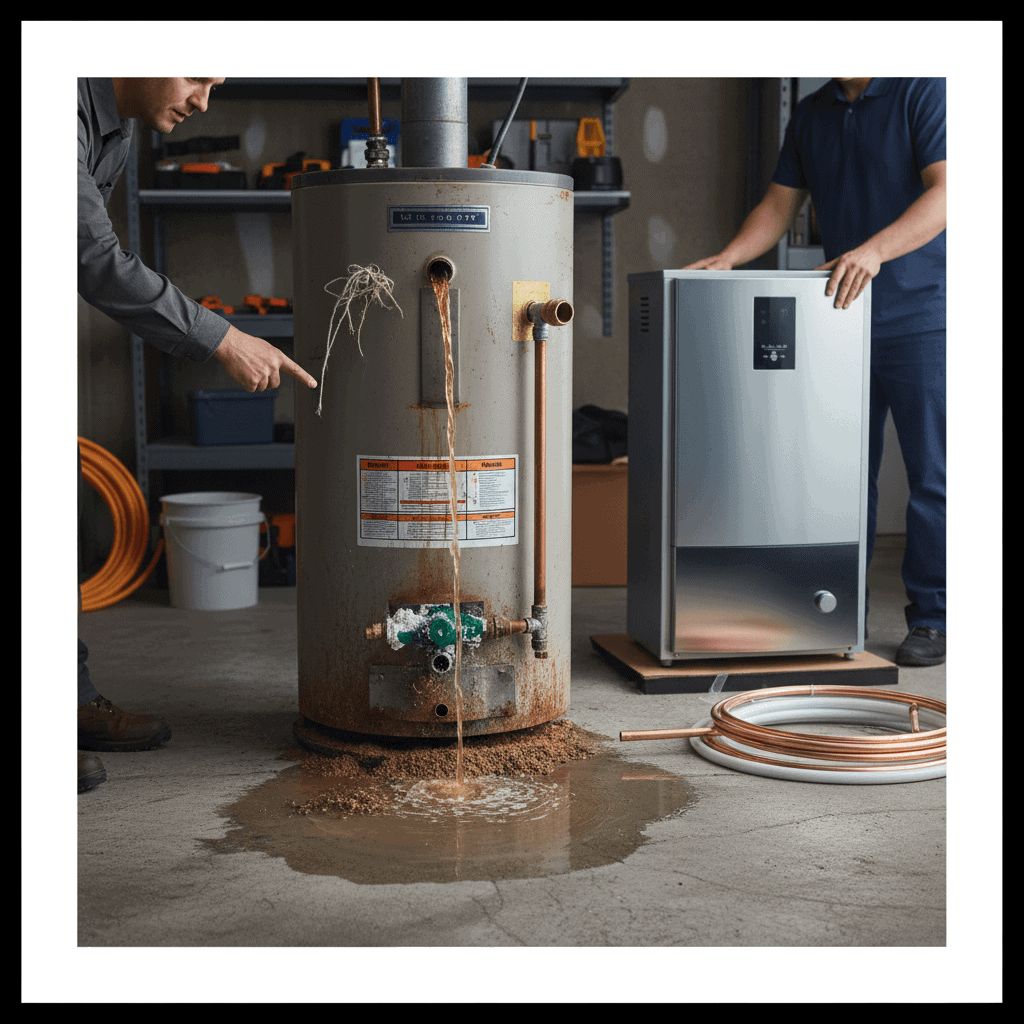
Knowing when to replace a water heater can seem tricky because it depends on its age, how well it works, past repairs, and safety concerns. Most people wait until it leaks or stops heating water, which leads to last-minute scrambling. Learning some key facts lets you swap it out on your own time, dodging surprise cold showers and costly water damage. Discovering these tips might just save you stress and money down the road.
This article lays out clear signs that replacement is the right move, practical cost comparisons, safety triggers that demand immediate action, and tips to choose a new unit that fits your household. Read on for examples and steps you can take today to keep hot water reliable and safe.
How long do water heaters last and what shortens their life span
Standard tank water heaters typically last between 8 12 years in many homes. Tankless units often reach 15 20 years when installed and maintained properly. Those ranges can shift based on water quality, frequency of use, installation quality, and maintenance habits.
- Hard water increases corrosion and scale buildup which can shorten life span.
- Poor installation or improper venting can create stress on components and reduce longevity.
- Skipping annual maintenance like tank flushing speeds up sediment buildup and wear.
Warranty periods give a useful clue about expected life span. Many tank units have 6 12 year warranties on tanks and parts. Tankless units commonly carry longer warranties on heat exchangers but may have shorter warranties on electronics. If your unit is at or past its warranty window, prepare for replacement costs instead of frequent repairs.
Clear signs that you should replace your water heater now
Some signs are simple to spot and should prompt action without delay. When you see any of the following, evaluate replacement rather than another repair.
- Age over the typical range for the unit type and frequent recent repairs
- Rust colored or metallic tasting hot water coming from taps
- Visible rust on the tank or fittings and active leaks pooling on the floor
- Loud rumbling or banging noises coming from the tank which indicate heavy sediment
- Inconsistent hot water or longer recovery times that impact daily routines
When noisy operation signals a failing tank
Rumbling and popping come from sediment collecting at the bottom of a tank. That layer reduces efficiency and can overheat the bottom of the tank leading to premature failure. A flush may help temporarily but repeated noise episodes suggest replacement may be more cost effective.
Why rusty water and leaks demand quick action
Rusty hot water usually points to corrosion inside a tank. Corrosion weakens the metal and often leads to sudden leaks. If you see rust at the water supply connections or any wetness beneath the tank, shut off the water supply and call a licensed professional to prevent floor damage and other hazards.
Repair versus replace decision making and cost examples
Knowing when a repair is reasonable depends on repair cost relative to replacement cost and the unit age. Use a simple rule of thumb: if a repair costs more than half the price of a new unit and the heater is older than its typical life span consider replacement.
- Common repair costs for tank units include heating element replacement 150 to 300 and thermostat replacement 100 to 250
- Pressure relief valve or drain valve replacement often runs 75 to 200 depending on parts and labor
- New standard tank unit with installation generally ranges from 800 to 1500 depending on capacity and whether gas or electric
- Tankless systems installed usually start near 1500 and can reach 3000 or more for whole house gas models with new venting
Example scenario: a 12 year old tank heater needs a new heating element and thermostats totaling 400. If a comparable new unit with installation is 1200 replacement is likely the smarter investment. The new unit includes new tank warranty and improved efficiency. If the unit is under 5 years old and the repair is small, repair may be reasonable.
Safety issues that demand immediate replacement or service
Some conditions require instant action for safety reasons. Never delay if you detect these problems.
- Strong gas odor near a gas water heater which can indicate a leak
- Active leaking that soaks floors or wiring and risks structural damage
- Malfunctioning temperature pressure relief valve that fails to release or is leaking
- Signs of carbon monoxide such as headaches or dizziness when gas appliances are running
If you smell gas turn off the gas supply at the shutoff valve and evacuate the building then call emergency services and a licensed plumber. For electric units with exposed wiring or water contact turn off the breaker and shut main water supply if safe. These steps reduce risk until a professional arrives.
Choosing the right replacement type for your home
Replacement choices include standard tank units, tankless on demand models, and hybrid heat pump tanks. Each has trade offs in cost, space, and operating costs.
- Tank units provide simplicity and lower initial cost and work well for households with predictable hot water patterns
- Tankless units provide continuous hot water and may reduce energy usage for the right household profile
- Hybrid heat pump models use heat pump technology for energy savings where climate and installation allow
Size and capacity guidance
For tank units choose a capacity that meets peak demand. Typical sizes range from 30 to 80 gallons. Look at first hour rating which indicates the amount of hot water available in an hour. For tankless choose a flow rate measured in gallons per minute for peak uses such as simultaneous showers and dishwasher operation.
Fuel type and installation factors
Gas models need proper venting and sometimes upgraded gas lines. Electric models require adequate electrical service and 240 volt circuits. Tankless gas units often need larger gas lines and specialized exhaust. When considering replacement factor in installation complexity and possible upgrade costs.
When to schedule replacement to limit disruption
Planning replacement during mild weather and when you can go without hot water for a few hours reduces inconvenience. Weekdays often offer quick scheduling with local plumbers. If you prefer same day service ask about emergency availability.
Getting multiple written estimates and confirming what each includes will prevent surprises. Confirm whether the quote covers removal of the old unit permit fees and whether any upgrades to gas lines electrical panels or venting are included. If you need help finding reliable pros in Fort Worth check local listings and reviews and consider reputable providers of water heater replacement services for comparison.
Maintenance steps to extend life and delay replacement
Regular maintenance can add years to a water heater and reduce the need for unplanned replacements. Consider these homeowner tasks and service items.
- Flush the tank once a year to remove sediment and reduce corrosion
- Inspect and replace the sacrificial anode rod every 3 5 years depending on water chemistry
- Test the temperature pressure relief valve yearly to verify proper operation
- Set the thermostat to 120 degrees Fahrenheit to limit corrosion and scalding risk while saving energy
- Keep the area around the heater clear and check for minor leaks at fittings
Some tasks like anode replacement and valve testing are best performed by a licensed technician. Regular service records also help when you need to decide between repair and replacement.
How professionals evaluate replacement versus repair
When a plumber inspects a unit they look at age corrosion level frequency of past repairs and overall condition of critical components. A written inspection often includes a photo of corrosion points and an estimate for both repair and replacement with pros and cons of each path. Ask for a breakdown of parts labor warranty and any required permits.
When getting quotes ask about the recommended capacity type and energy use comparison. A clear comparison helps you choose a model that meets household needs without overpaying for capacity you will not use.
Replacing a water heater is a practical decision informed by age performance repairs and safety. If your heater is past its expected life shows signs of serious corrosion leaks or produces inconsistent hot water replacement is often the wiser long term choice. For households weighing repair costs against replacement remember the rule of thumb where expensive repairs on older units usually point toward installing a new unit. Schedule replacement during a convenient time get multiple quotes and confirm installation details and warranties.
Ready to take the next step Gather recent service records note the unit make model and age and make a short list of replacement priorities like capacity energy source and budget. Contact a licensed plumber for a site visit and written estimate so you can compare options with confidence. A timely replacement prevents emergency failures protects your home from water damage and restores reliable hot water for everyday needs.